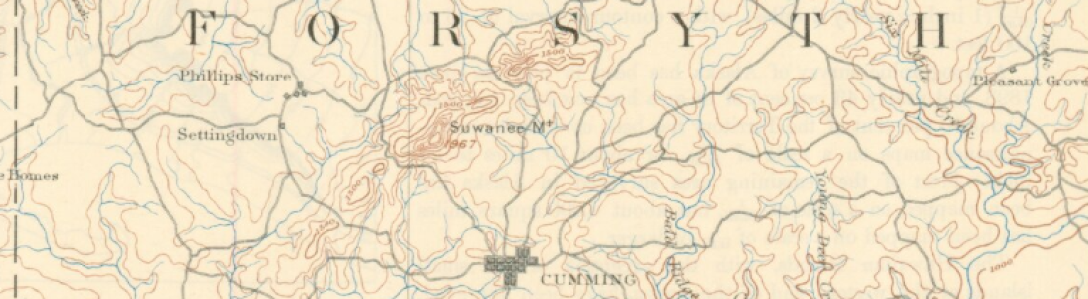
In the fall of 1912, a young man named Toney Howell sat behind bars in the Forsyth County jail. Outside, the county simmered with fear and violence. A white woman, Ellen Grice, was allegedly raped, and in response, the sheriff rounded up the usual suspects. Among them was Toney, barely eighteen years old, whose only real crime was being young, Black, and living in Forsyth County at the wrong time.1
Newspapers warned that if a lynching took place, Toney Howell would likely be the victim. During this period, a Black preacher named Grant Smith was nearly lynched in connection with the Grice case. The situation grew even more volatile when another woman, Mae Crow, was attacked just two days later. In the wake of her death, a mob stormed the Cumming jail and lynched Rob Edwards in the town square.1
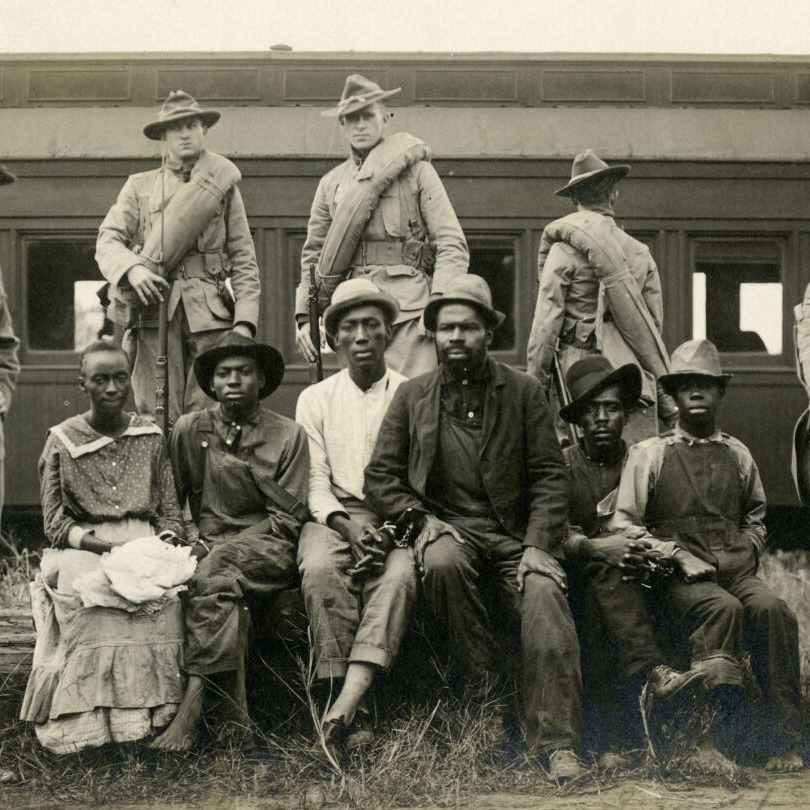
Toney Howell spent weeks in jail as tensions exploded around him. He was not accused in the Mae Crow case, but the threat of mob violence hung heavy over him all the same. Eventually, after no witnesses came forward in the Grice case, Toney was quietly released. He survived the racial terror that consumed Forsyth County that year, but his life would never be the same.
Toney Howell’s story is inseparable from that of his foster father, Morgan Strickland. Census records from 1900 list Toney as Morgan’s adopted son in Milton County.2 By 1910, he was recorded as Morgan’s nephew while they lived in Forsyth County.3 Morgan had no known biological children of his own, strengthening the bond between him and Toney. Their connection remained strong even after the violence of 1912 forced them to flee Forsyth County. When Toney started a new life in Gwinnett County, farming a rented plot of land, Morgan lived right next door.4
In 1917, like many young men of his generation, Toney registered for the draft as the United States entered World War I.5 Described as tall, medium-built, with black hair and black eyes, he was called up in early 1918 and began training at Camp Gordon near Atlanta. He served with Company B of the 514th Engineers, a segregated unit tasked with critical construction and engineering work overseas. In April 1918, Toney boarded the USS Matsonia for France.6
Toney Howell served honorably in France throughout the remainder of the war. After the armistice, he sailed home aboard the SS Von Steuben in June 1919 and was honorably discharged two weeks later.7 His service record proudly notes his rank of Private First Class. On military documents, Toney listed Morgan Strickland as his foster father and Duluth, Georgia, as his home.
Life after the war was not easy. Toney returned to farming in Gwinnett County, but by 1925, at just 36 years old, he passed away. His death certificate lists diabetes as the cause of death.8 Toney was buried in Warsaw, Milton County, Georgia, at Macedonia African Methodist Church Cemetery. Over time, the cemetery fell into neglect, but recent efforts by the city of Johns Creek have worked to preserve and restore the site. Today, there is no known marker for his grave.
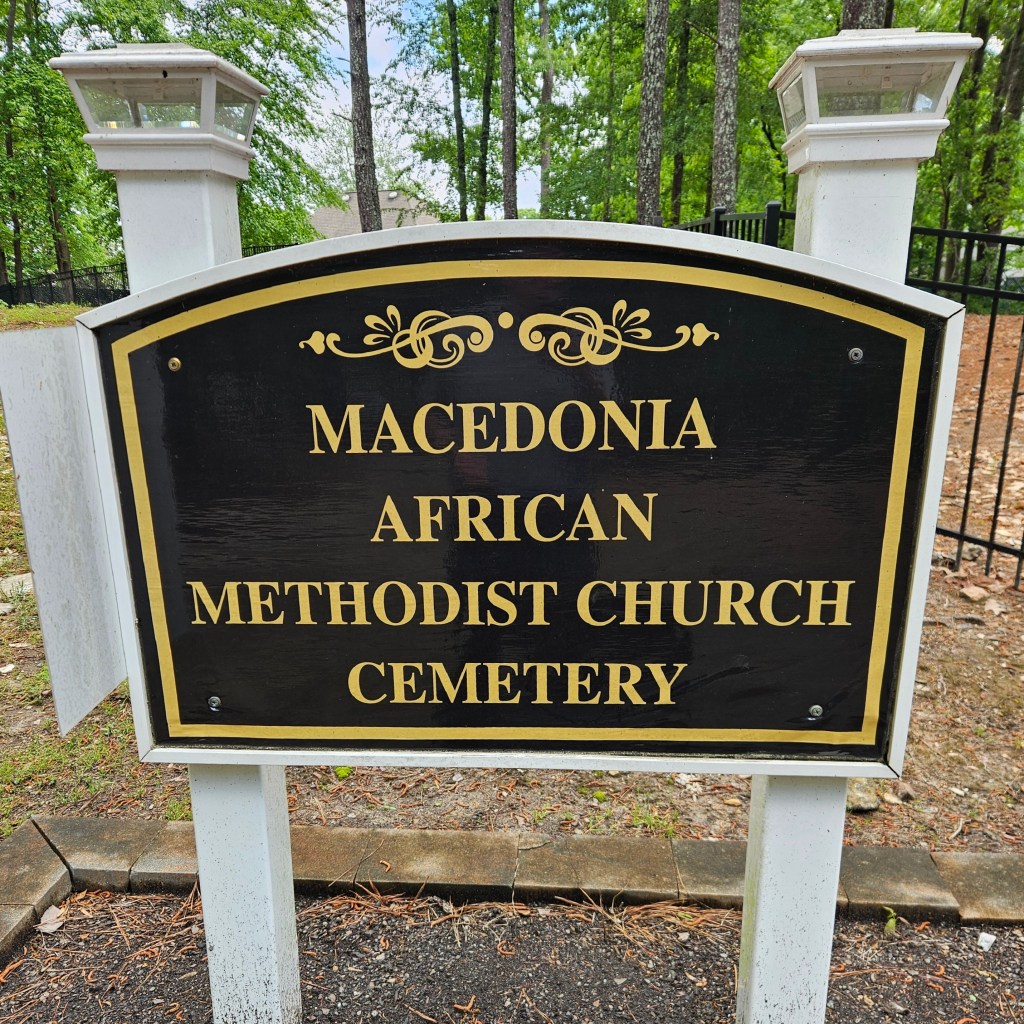
In 2022, the Johns Creek Historical Society and the Johns Creek Veterans Association honored Toney Howell as part of the “Wreaths Across America” program.9 They placed a wreath at a temporary marker for him, recognizing his service and sacrifice during World War I. Their research into Macedonia Cemetery identified Toney among the many veterans buried there without gravestones. It was a fitting, if overdue, gesture of remembrance.
Toney Howell’s life was shaped by injustice, but it was also marked by resilience and dignity. He survived where others did not, served his country when called, and built a life where he could. His story, inseparable from that of Morgan Strickland, offers a window into the tragedy and the endurance of Black life in Forsyth County’s darkest chapter.
Today, more than a century later, we remember.
Footnotes
- Patrick Phillips, Blood at the Root: A Racial Cleansing in America (W. W. Norton & Company, 2016). ↩ ↩2
- 1900 U.S. Census, Milton County, Georgia, Household of Morgan Strickland, Toney listed as “adopted son.” ↩
- 1910 U.S. Census, Forsyth County, Georgia, Household of Morgan Strickland, Toney listed as “nephew.” ↩
- 1920 U.S. Census, Gwinnett County, Georgia, Household of Toney Howell, residence adjacent to Morgan Strickland. ↩
- World War I Draft Registration Card, Toney Howell, Gwinnett County, Georgia. ↩
- World War I Passenger List, Departure from Brest, France, May 29, 1919, Ship: Von Steuben. ↩
- World War I Statement of Service Card, Georgia Archives, Toney Howell, Company B, 514th Engineers. ↩
- Georgia Death Certificate, Toney Howell, January 22, 1925, Duluth, Gwinnett County, Georgia. ↩
- Johns Creek Historical Society, “Wreaths Across America Honors Pfc. Toney Howell,” December 17, 2022, https://www.johnscreekhistory.org/NewsArchives/Dec17_2022_WreathsAcrossAmer_Macedonia.htm. ↩

 Lost Black Land of Forsyth County